An industrial engineering firm had decades of technical expertise, but little
of it was visible on LinkedIn. Posting was sporadic, and the company page did
not reflect the depth of work behind the business.
The Approach
Demand Delta turned the firm's existing project and proposal documentation
into technical LinkedIn content for plant managers, operations leaders, and
engineers. Instead of generic industry commentary, each post drew from
problems the firm had already solved and explained them at the level its ideal
clients expected.
EF
Engineering Firm
Process & Combustion Engineering
1mo·
···
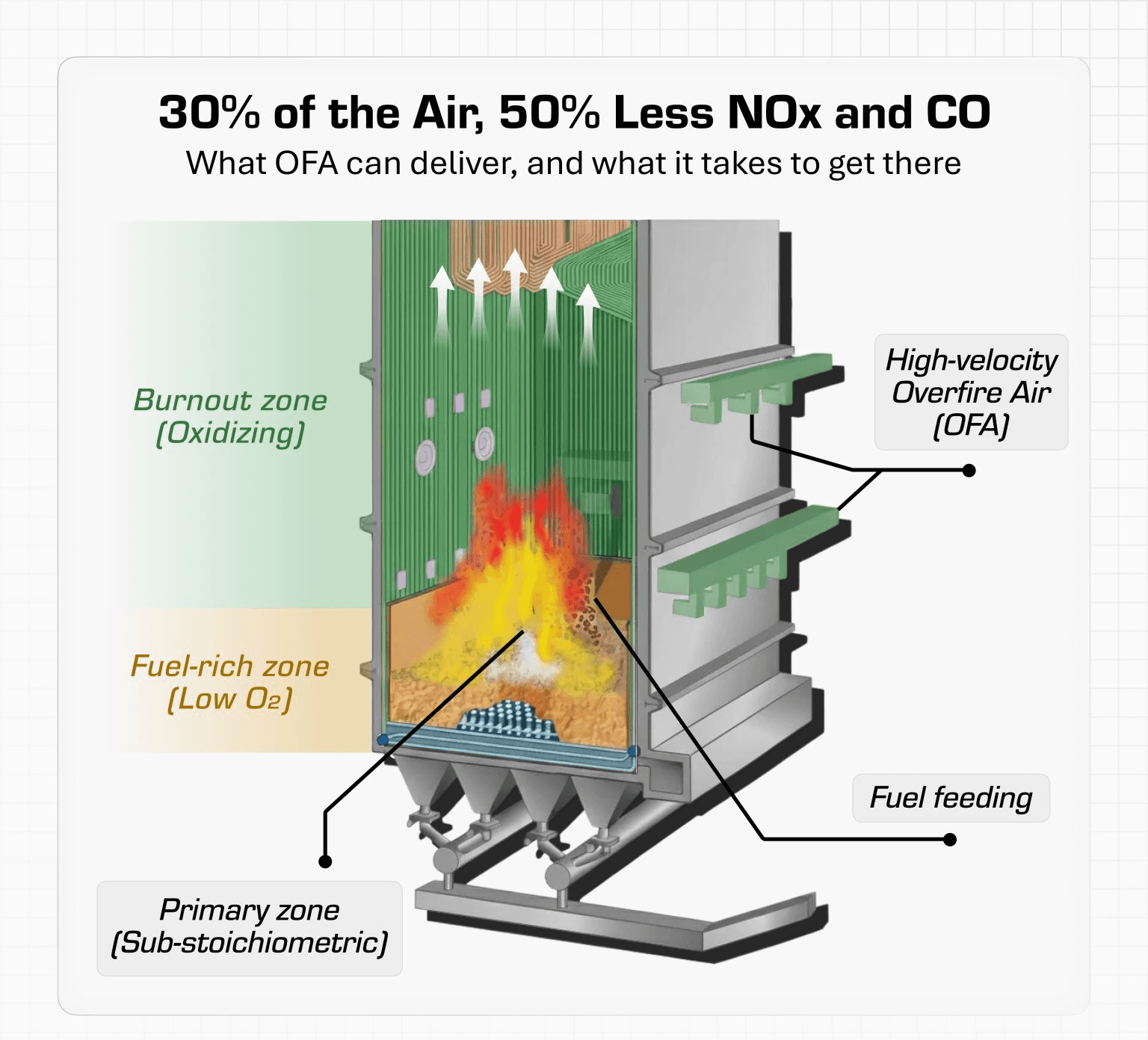
Reducing NOx usually comes with a penalty: higher unburned carbon and CO. The 𝗢𝘃𝗲𝗿𝗳𝗶𝗿𝗲 𝗔𝗶𝗿 (𝗢𝗙𝗔) system is the engineering solution designed to break that trade-off.
But how does it actually work?
An Overfire Air System reduces NOx formation by staging combustion. Instead of dumping all the combustion air into the primary combustion zone, a portion (typically 25-40%, but can be as high as 60-70%) is introduced in zones above the primary combustion zone.
In a well designed, flexible OFA system, boiler operators have options for making air adjustments when fuels change (i.e. moisture content, fuel particle size, etc.) without compromising production and/or emissions compliance.
How Staged Combustion Works:
1. 𝗣𝗿𝗶𝗺𝗮𝗿𝘆 𝗭𝗼𝗻𝗲 (𝗦𝘂𝗯-𝗦𝘁𝗼𝗶𝗰𝗵𝗶𝗼𝗺𝗲𝘁𝗿𝗶𝗰): The primary combustion zone operates fuel-rich (starved of air). This limits oxygen available for volatile release and provides just enough for efficient fixed carbon burnout, lowering the primary combustion zone temperatures and reducing thermal NOx.
2. 𝗢𝗙𝗔 𝗭𝗼𝗻𝗲 (𝗕𝘂𝗿𝗻𝗼𝘂𝘁): The remaining combustion air is introduced at high velocity through ports above the primary combustion zone. This creates the turbulence and mixing needed to complete combustion before the gas enters the convection passes.
For biomass and waste fuels especially, simply adding air ports is not enough. You need location, turbulence, and penetration.
Does your facility struggle with balancing NOx and CO emissions compliance against combustion efficiency?
412 comments · 7 reposts
The Result
January produced 12% organic follower growth in one month. The page also
generated more than five times the organic impressions of every other month
in the available twelve months of data.
The growth came entirely from organic distribution. No sponsored posts. No ad
spend.
The firm did not need to manufacture expertise or start from a blank page. The
material was already inside its project archive. The work was selecting the
right subjects and turning them into useful content for the right audience.
See engineering firm growth systems running.
You will leave with a clear view of how firms like yours are growing, what to prioritize at your growth stage, and what a practical next step could look like.